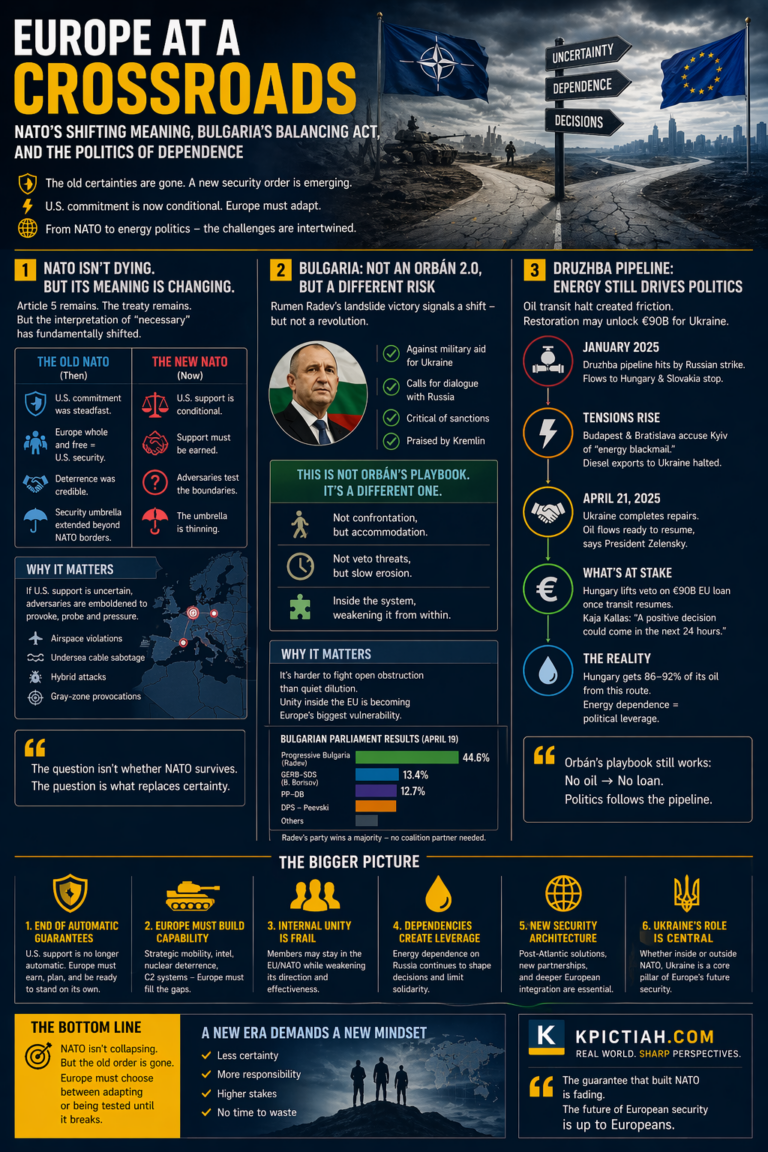
As Ukraine enters the fourth year of Russia’s full-scale invasion, the war is being fought on two equally critical fronts: the battlefield, where soldiers claw back villages inch by inch, and the diplomatic stage, where global leaders wrestle with uneasy alliances and dangerous compromises.
The events of mid-August 2025 underline this reality. From Alaska, where U.S. President Donald Trump rolled out a red carpet for Vladimir Putin, to secret Ukrainian drone workshops, to the battle-scarred villages of Donetsk Oblast, the war’s outcome will hinge on both military grit and geopolitical gamesmanship.
The Alaska Summit: Symbolism Over Substance
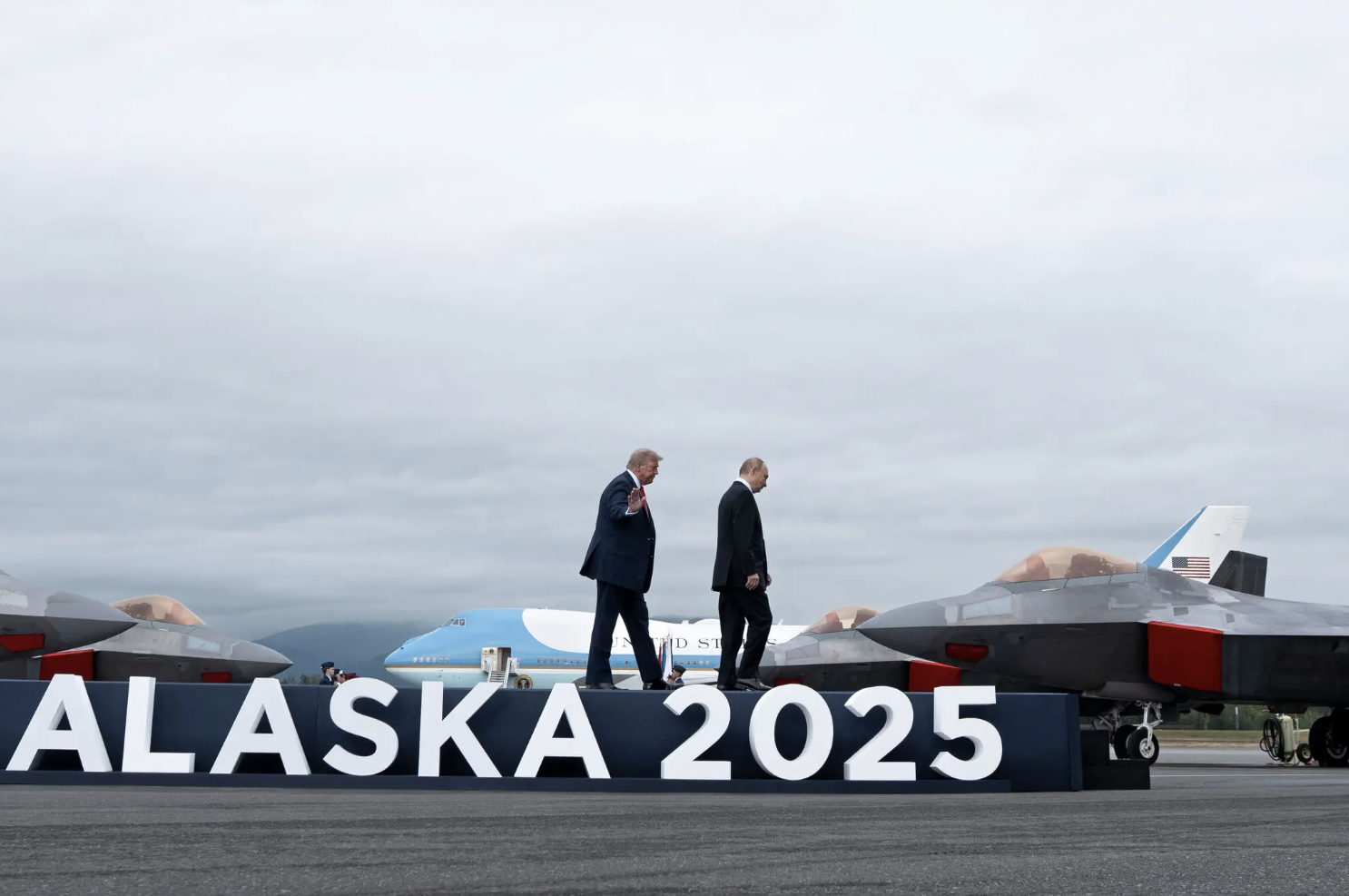
The Aug. 15 meeting in Anchorage, Alaska, was supposed to be Trump’s bold move toward peace. Instead, it became a showcase of optics over outcomes.
Putin, long shunned by the West and facing an international arrest warrant, was welcomed with fanfare: fighter jet escorts, a literal red carpet, and even a ride in Trump’s armored limousine. The optics were powerful, a blood-soaked dictator transformed into a respected statesman, at least for the cameras.
But what came of the talks? Little more than vague hints about “progress” and “understandings.” Trump admitted they hadn’t reached a ceasefire, the very goal he had set, and floated instead the idea of “land swaps” proposals that would force Ukraine to surrender parts of Donetsk and Luhansk in exchange for Russian withdrawals elsewhere.
Zelensky has firmly rejected such concessions, calling instead for a ceasefire as the first step. Yet Trump’s post-summit comments shifted responsibility for ending the war onto Ukraine itself: “Russia is a very big power, and they are not. Now it is really up to President Zelensky to get it done.”
For many in Ukraine, it felt like betrayal. For Putin, it was vindication.
Europe Pushes Back
Europe reacted with a mix of alarm and resolve. German diplomat Wolfgang Ischinger summed up the mood bluntly: “Clearly 1:0 for Putin. No ceasefire, no peace. For Ukrainians: nothing. For Europe: deeply disappointing.”
Fearing Trump may pressure Kyiv into concessions, European leaders are preparing to back Zelensky directly. Finnish President Alexander Stubb and NATO Secretary-General Mark Rutte may join him in Washington for talks with Trump on Aug. 18, ensuring Europe has a voice at the table.
Meanwhile, Macron and Starmer will lead a coalition videoconference to coordinate strategy. The message is clear: Europe will not let Trump and Putin decide Ukraine’s fate alone.
Ukrainian Voices: Fear of Abandonment
Inside Ukraine, the summit stirred deep unease. Lawmaker Oleksandr Merezhko said bluntly: “Putin has two wins: breaking political isolation and avoiding sanctions. Trump promised consequences. He delivered none.”
Others worry Trump’s obsession with a Nobel Peace Prize will lead him to shift the burden onto Zelensky. As Bohdan Krotevych, former chief of staff of the Azov Brigade, put it: “Most likely, he will shift responsibility for ending the war onto Zelensky.”
Civil society leaders echoed the concern. Olena Halushka of the International Center for Ukrainian Victory warned that the debate had dangerously shifted from how to punish Russia to what Ukraine must give up. “Russians feel emboldened after this summit. They can’t beat us militarily, so they will try to beat us politically.”
On the Ground: Ukraine Still Advances
Even as leaders spar over negotiations, Ukraine’s military continues to press forward in Donetsk Oblast. Between Aug. 4–16, Ukrainian forces recaptured six villages, including Hruzke, Rubizhne, and Petrivka, inflicting heavy losses: 910 Russian troops killed, dozens of tanks and artillery destroyed, and over 90 drones downed.
Fighting has intensified near Dobropillia and Pokrovsk, where Russia has massed more than 110,000 troops. Yet Ukrainian counterattacks have blunted advances and forced Russian surrenders.
Zelensky acknowledged the difficulty but stressed resilience: “The situation in Donetsk remains extremely difficult, but our forces are succeeding in counterattacks for a second day.”

The Drone War: Moving Away from China
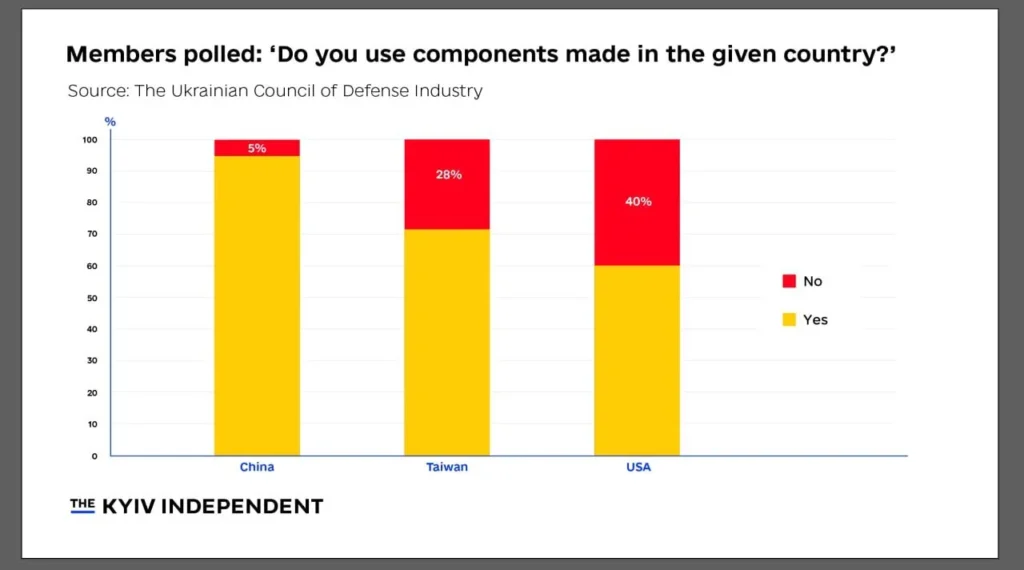
Away from the front lines, Ukraine is waging a different kind of war against dependence on Chinese drone components. Once reliant almost entirely on Chinese suppliers, Ukrainian firms are now building their own motors, controllers, and fiber-optic spools.
Motor-G, Ukraine’s largest motor producer, now manufactures up to 100,000 drone motors a month. Founder Oleksiy Grebin says: “There are brands in Europe, but they’re actually made in China. We are the only ones producing motors here.”
Other workshops like Hasta are 3D-printing components and creating spools for drones capable of striking 50 kilometers deep. As founder Andriy puts it: “We are moving little by little away from China.”
Still, dependence lingers. Critical parts like magnets and fiber optics still come from abroad, often through intermediaries. The risk is global: as one Pentagon official warned, “China could shut down the drone industry globally for a year.”
Recognizing this, Zelensky imposed sweeping new sanctions on Russian, Chinese, and Belarusian firms tied to drone technology. The goal is to cripple Moscow’s production while building Ukraine’s own independent supply chain.
Putin’s Obsession With Lost Glory
If Alaska proved anything, it’s that Putin’s war is about more than territory. His post-summit remarks revealed his true obsession: restoring Russia’s Cold War-era status. He spoke not of ending bloodshed but of “restoring balance in the security sphere,” Kremlin shorthand for reversing Moscow’s 1991 defeat.
Russia’s Foreign Minister Lavrov underlined the point by arriving in Alaska in a USSR sweatshirt. Meanwhile, Russian propagandists cheered Trump’s flattery, his claim that “Russia is No. 2 in the world”, as proof that the U.S. now treats Russia as an equal superpower again.
For Putin, it was never about Donetsk or Kharkiv. It’s about empire.
The Stakes in Washington
As Zelensky prepares to meet Trump in Washington, the stakes couldn’t be higher. Will Ukraine be forced into concessions it cannot legally or morally accept? Or will Europe’s “heavy hitters” help anchor U.S. support for a just peace, one based on defending sovereignty, not rewarding aggression?
On the battlefield, Ukraine is holding the line. In its factories, it is reducing dependence on China. But politically, the war could still be lost if allies falter.
As Ukrainian lawmaker Mykola Kniazhytskyi warned: “The Constitution prohibits giving up territory. If Zelensky signed such a deal, it would be annulled and criminal. These demands are made only so Ukraine rejects them. The real danger is Trump using our refusal as a pretext to walk away.”
Ukraine cannot afford to lose on the diplomatic front what it is fighting so hard to win on the battlefield.
✍️ If you found this article insightful, consider supporting my work on Buy Me a Coffee. Independent analysis matters now more than ever.
Did you know that for under $10 you can own a cap like this and support Ukraine that way? You can buy it HERE. Supporting Ukraine is now more important than ever.
About the Author