Many days after Donald Trump staged his big Alaska summit with Vladimir Putin, and days after a follow-up huddle with Volodymyr Zelensky and European leaders, there is still no ceasefire, no roadmap, and not even a firm date for Putin and Zelensky to meet. What we do have is a mounting body count from Russian missile and drone strikes, fresh Kremlin demands that would make Ukraine a vassal, and a U.S. strategy that lurches between photo-op mediation and promises of “security guarantees” the White House has yet to define.
This isn’t diplomacy, but it’s a strategic muddle. Below is where things actually stand, what each side wants, why the talks keep failing, and what it would take to change the trajectory.
1) The theory of the case versus the reality on the ground
Trump’s theory: personal chemistry can cut the Gordian knot. “Nothing’s going to happen until Putin and I get together,” he said in May. In Alaska they did, complete with red carpet and friendly optics. Trump then hinted that Putin would accept Western “Article 5-like” security guarantees for Ukraine and meet Zelensky one-on-one, followed by a trilateral session with Trump. Within days, Moscow poured iced water on all of it. Sergey Lavrov said no summit was planned, the “agenda is not ready,” and any “guarantees” must include Russia itself, a fox-guards-the-henhouse construct that would give the aggressor a veto over the victim’s security.
Reality: the battlefield is driving the diplomacy, not the other way around. Russia is pressing slowly across the Donbas, probing Ukrainian lines with small infiltration groups under a thick drone canopy while continuing to bombard cities far from the front with missiles and loitering munitions. In this context, talks without leverage simply ratify facts Moscow is creating by force.
2) The strategic incoherence
Across ten days, the U.S. position has whipsawed:
- Mediator mode: Trump casts himself as an honest broker who can “make a deal,” hinting Ukraine might need to give up land to “the betterment of both.”
- Security-guarantee mode: Trump then says the U.S. will help provide “Article 5-like” assurances after hostilities, but without U.S. troops on the ground and with details left for later.
- Pressure mode (theoretical): he repeatedly sets two-week deadlines for Putin to show he’s serious, threatening “severe consequences” that never arrive.
The result is a vacuum of leverage. Moscow learns two lessons: 1) threaten or advance a little and Trump will seek another leaders-only huddle; 2) deadlines are cost-free to ignore.
As former NATO ambassador Ivo Daalder put it, this approach “abandons a relatively unified Western position (ceasefire first) and scores an own goal.” The U.S. looks less like an architect of peace than a producer of episodic television.
3) What Putin wants (and why he’s in no hurry)
Strip away the atmospherics and the Kremlin’s demands are unchanged:
- Territory: legal recognition of Russia’s annexations (Crimea + four oblasts seized in 2022), and Ukrainian withdrawal from all of Donbas, including areas Kyiv still controls and has fortified for years.
- Status: a NATO ban for Ukraine; no Western troops on Ukrainian soil; limits on Kyiv’s force structure, mobilization, and Western aid.
- Vetoes: any “security guarantee” must give Russia a role (ideally a veto) in responses to future aggression.
This is not compromise; it’s capitulation by increments. As multiple analysts note, Putin’s strategy is attritional and time-based: advance where possible, delay where useful, talk when it helps, never concede core aims. If he can’t get formal recognition now, he’ll pocket any de-facto concessions, regroup, and try again later.
4) Why Ukraine can’t, and won’t, trade land for “peace”
Ukrainian politics and public opinion make territorial giveaways a non-starter. Beyond morality and law, it’s bad strategy: cede your most fortified, defensible terrain and you invite the next offensive from stronger positions. Without ironclad, enforceable guarantees (which neither Moscow accepts nor the West has defined), a land-for-pause deal merely resets the clock for Russia’s next round.
Kyiv’s minimum sequence is clear: ceasefire first, then a framework of credible security guarantees, then talks about the end-state. Anything else incentivizes the aggressor and splits Ukraine’s coalition.
5) The security guarantee mirage
“Article 5-like” rhetoric sounds strong until you read the fine print: no U.S. troops, no NATO accession, ambiguous triggers, undefined commitments, and, if Russia has its way, a Russian seat among the guarantors. That’s not deterrence, but it’s a procedural trap.
A credible architecture requires three pillars:
- Capabilities: sustained, multi-year Western supply of air defense, long-range strike, armor, ISR, and industrial support for Ukrainian production.
- Commitments: automatic, time-bound response mechanisms to specific Russian violations (sanctions escalators, energy/financial cut-offs, and predefined military aid tranches).
- Presence: a limited Western reassurance presence after hostilities end, logistics, training, air policing, and missile defense coverage over western Ukraine, backed by prepositioned stocks and real contingency plans.
Anything less is “a hot dog without the hot dog.”
6) Deadlines, delusions, and the cost of optics
Trump’s two-week clocks are theater. The pattern is now familiar:
- Announce a deadline → hold a made-for-TV meeting → declare movement → allow the deadline to pass → reset the clock.
- Meanwhile, Russia shells cities and inches forward. Each delay erodes Ukrainian morale, complicates mobilization, and strains Western political will.
Even sanctions signaling has become mixed: threats of “massive” new penalties offset by boasts about friendly exchanges and framed photos from the summit. In Moscow, that reads as permission to keep stalling.
7) What would actually change the Kremlin’s calculus
Peace talks are not magic; they’re math. Without leverage, they freeze losses. With leverage, they can freeze lines, or better. That leverage comes from:
- Economic pain that bites: secondary sanctions on banks and energy traders facilitating Russian exports; tariff regimes that make Russian oil financially toxic; enforcement that closes evasion routes.
- Air denial over Ukraine: a layered shield (Patriot/SAMP-T/NASAMS + interceptors) and authorities to engage cross-border launch platforms when actively firing.
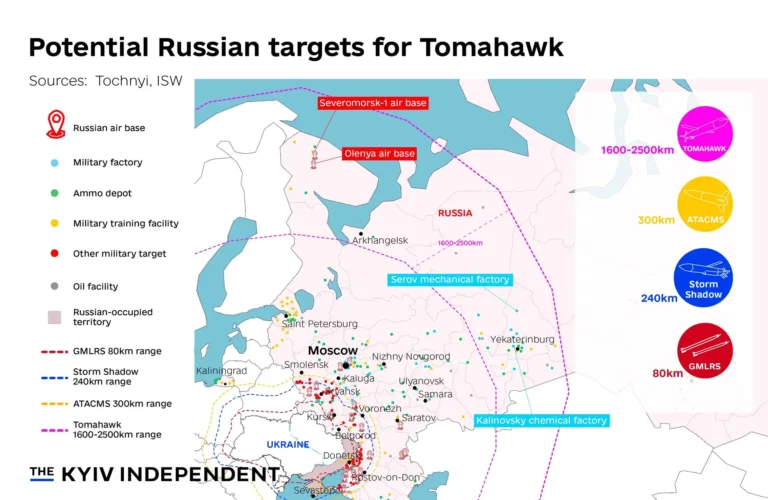
- Sustained Ukrainian strike depth: domestic long-range systems (e.g., Flamingo-class) at scale, paired with Western standoff munitions, to degrade Russian logistics, airbases, oil infrastructure, and drone production.
- Manpower relief and training surge: rotational schemes, accelerated training in Europe, and targeted incentives that rebuild unit cohesion at the front.
- A real reassurance force post-war: multinational, non-combat deployments west of the Dnipro to anchor training, logistics, and air policing, deterrence by footprint, not fiction.
If those costs mount and battlefield momentum stalls or reverses, then Putin will pivot to the best “freeze” he can sell at home. Until then, he has no incentive to stop.
8) The Bottom Line
The Alaska summit produced optics without outcomes and moved the U.S. from a coherent “ceasefire-first” baseline to an elastic, personality-driven process Moscow can game. Putin isn’t confused by this; he’s encouraged. Ukraine isn’t refusing peace; it’s refusing surrender dressed as peace.
Diplomacy can end this war, but only if it rides on the back of pressure. Set verifiable conditions. Pair talk tracks with teeth. Stop announcing clocks you won’t enforce. And remember the first law of coercive bargaining: don’t threaten what you won’t do, and don’t promise what you won’t fund.
Until that changes, the “peace process” isn’t a bridge to a deal. It’s a cul-de-sac, one Russia is happy to circle while the missiles keep falling.
If this analysis helped cut through the noise, you can fuel more work like it: buy me a coffee and keep Kpictiah digging into the stories that matter.
About the Author